Commercial Fence Contractor Solutions for Toronto Area Businesses
A commercial fence does far more than mark a property line. For a business in Toronto or anywhere across the Greater Toronto Area, it controls access, reduces liability, protects inventory, supports insurance requirements, and shapes first impressions before a customer or delivery driver ever reaches the door.
That is why commercial work rarely follows the same logic as a backyard fence installation. A retail plaza in Scarborough, a warehouse in Mississauga, a condominium service yard in Vaughan, and an industrial lot in Oshawa all need different answers from a fence contractor. The right system depends on traffic flow, risk level, municipal rules, snow storage, gate access, visibility, and how the property actually operates on a wet Tuesday in February, not just how it looks on a drawing.
Businesses often start the process thinking in simple terms: chain-link or ornamental, tall or short, one gate or two. In practice, a commercial fence contractor has to solve a much bigger site problem. The fence has to stand up to freeze-thaw cycles, salt exposure, repeated gate use, occasional vehicle contact, and changing tenancy needs. It also has to be installable with minimal disruption to customers, staff, loading schedules, and neighboring properties.
What commercial clients in the GTA usually need
Most commercial fence projects fall into one of a few functional categories, even when the finished result looks different from site to site. Security fence installation is common for warehouses, contractors’ yards, utility areas, storage compounds, and automotive facilities. Perimeter fence installation is often needed at schools, commercial plazas, logistics sites, and multi-building business parks. Privacy fence installation comes up around waste enclosures, mechanical units, staff break areas, and service zones where appearance matters as much as containment.
There is also a large middle ground where a fencing company has to blend security and presentation. A medical office may want privacy around HVAC equipment without looking industrial. A condominium corporation may want an ornamental metal fence at the front and a more utilitarian system around the loading and garbage area. A pool enclosure contractor working on a hotel or multi-residential amenity space has another layer of code and safety considerations entirely.
This is where experience matters. A fence installation company that mainly handles residential fence contractor work can do excellent craftsmanship, but commercial projects tend to involve heavier gate hardware, tighter scheduling, more formal site coordination, and a different tolerance for failure. A gate sagging at a home is inconvenient. A gate failing at a loading area can stop deliveries, create a safety issue, and trigger after-hours emergency calls.
Why commercial fence work in Toronto is rarely straightforward
The GTA is one of those markets where two projects with the same linear footage can differ dramatically in scope. Soil conditions change from one municipality to the next. Access to the fence line might be wide open in Burlington and painfully tight in old Toronto laneways. One property may have clean grades and good drainage. Another may have buried concrete from a previous build, decades-old fence posts, hidden asphalt edges, or utility conflicts that slow the whole job.
Winter adds another layer. In durable fencing Ontario projects, you are not just building for wind load and normal use. You are building for snow banks pushed by plows, repeated freeze-thaw movement, corrosive road salt, and gates that need to swing or slide reliably after a storm. This is why fence posts, post depth, base preparation, and hinge quality matter more than many buyers expect. On paper, two fence quotes wood fence installer can look similar. In the field, one may include heavier terminal posts, stronger bracing, and commercial-grade gate frames, while the other simply prices the cheapest way to enclose space.
That gap becomes obvious after the first full winter.
I have seen chain-link fence installations perform beautifully for years because the fencing contractor paid attention to post spacing, footing size, and gate alignment. I have also seen attractive-looking installations fail early because corners were underbuilt, footings were too shallow for local conditions, or a double gate was installed without enough thought given to forklift traffic and ice.
Choosing the right fence materials for business use
Commercial buyers often ask about the best fence materials as if there is one universal answer. There is not. There is only the best fit for the property, the risk profile, and the maintenance tolerance.
Chain-link remains one of the most practical options for many GTA businesses. A skilled chain-link fence installer can create a secure, durable perimeter at a lower fence installation cost than most ornamental systems. It works well for yards, storage areas, service compounds, sports facilities, and industrial sites. It is also easy to repair in sections if damage occurs. For businesses focused on function first, chain-link is hard to beat.
Wood still has a role, but usually in more selective applications. A wood fence installer may be the right choice for screening a waste area, enclosing a patio, or creating separation around a commercial courtyard. It offers warmth and privacy, but in high-use commercial settings it usually brings more maintenance than vinyl or metal. Boards loosen, posts move, and finish quality changes over time. For a storefront or hospitality property, that can be acceptable if the aesthetic value is part of the brand. For a logistics yard, it is often the wrong material.
Vinyl can be attractive for low maintenance fence applications, especially where a business wants clean visual screening without frequent staining or painting. A vinyl fence installer can provide tidy privacy panels around commercial side yards, utility spaces, and customer-facing service areas. Still, vinyl is not ideal for every security application. Impact resistance and long-span rigidity need to be judged honestly. It performs best where appearance and low upkeep matter more than hard security.
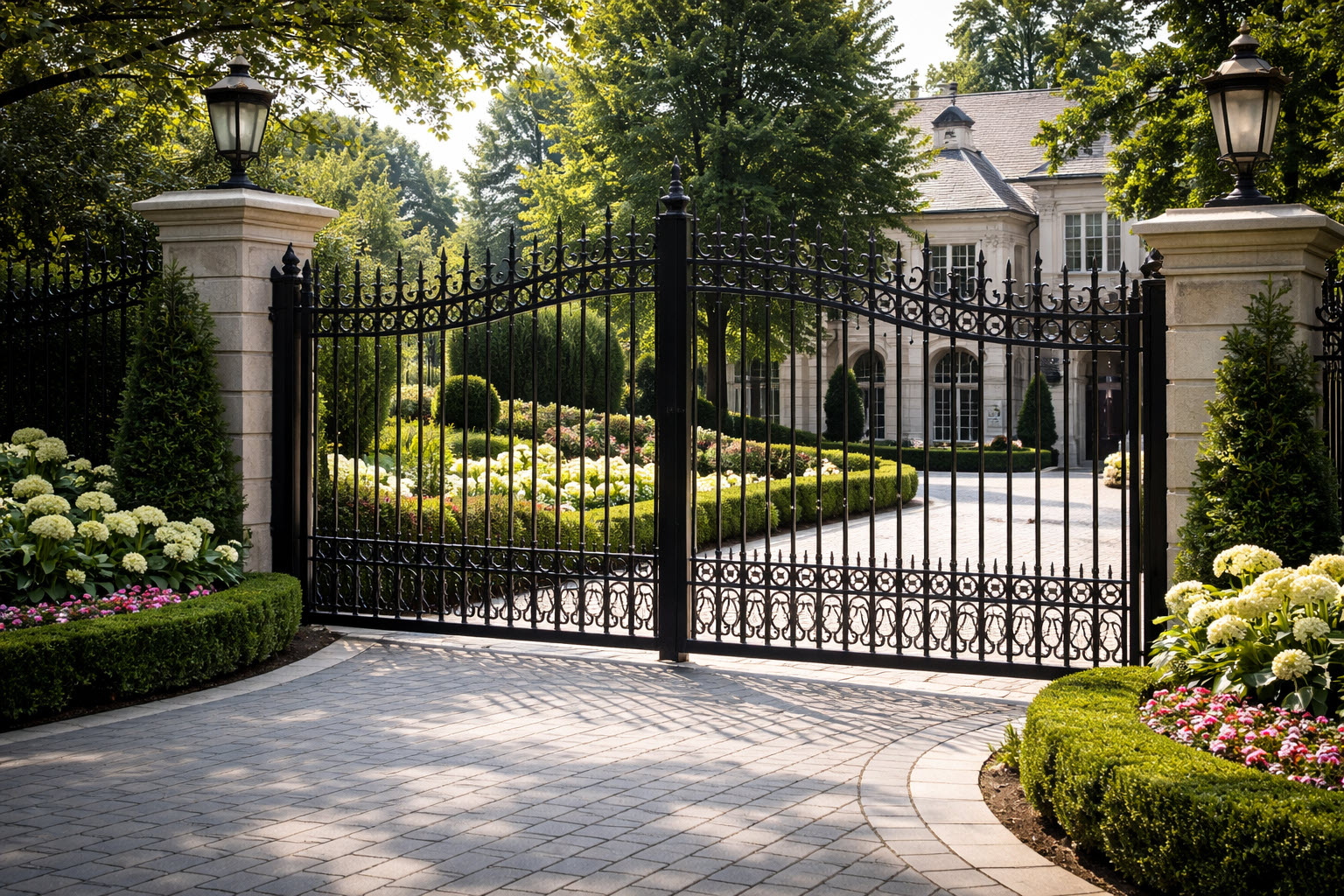
Ornamental metal fence systems are often chosen where curb appeal and controlled access need to coexist. An ornamental metal fence can look sharp at office buildings, schools, parks, and higher-end multi-unit developments. It offers good sightlines, a strong finished look, and compatibility with automatic gate installer systems. The trade-off is cost. Material, fabrication, finishing, and gate hardware usually place ornamental systems above basic chain-link in fence cost per foot.
For industrial fence contractor work, mixed-material solutions are common. A business may use ornamental fencing at the front elevation, chain-link around the rear yard, privacy screening around equipment, and a separate gate package at the truck entrance. Good commercial fence contractor planning rarely forces one material onto the entire site if the site has different needs.
The part that makes or breaks a project, fence line planning
Fence line planning sounds simple until equipment, drainage, easements, overhead wires, utility locates, grade changes, and neighboring access all enter the conversation. This is where a local fence company earns its keep.
A strong plan starts with how the property works day to day. Where do deliveries arrive. Where do staff park. Does the garbage truck need a clear turning radius. Is there enough setback for a sliding gate, or does a swing gate make more sense. Will snow be piled against the fence in winter. Can emergency services still access the site as required.
These details shape everything from gate width to post placement. On many GTA fence installation jobs, the actual challenge is not the fence itself. It is making sure the fence does not interfere with business operations. A warehouse in Brampton may need a cantilever gate because swing clearance would be blocked by parked trailers. A Markham medical office may need a privacy fence that screens service equipment without creating a blind corner for pedestrians. A retail plaza in Richmond Hill may need fence panels configured so maintenance staff can still reach meters and utilities without opening the main yard gate every time.
Old fence removal also affects planning more than clients expect. If an existing fence has concrete footing removal requirements, the labor can be substantial, especially when footings are oversized or buried under asphalt. It is one reason fence replacement pricing sometimes surprises property managers. Removing the old line cleanly, hauling material away, restoring disturbed areas, and then building the new system can take far longer than the visible finished product suggests.
perimeter fence installation solutionsPermits, rules, and the Ontario context
Commercial buyers should never assume one standard set of fence permit requirements across the GTA. Municipal rules differ. Fence height rules differ. Requirements around visibility triangles, pool enclosures, corner lots, and gates can differ. Some projects move ahead without a formal permit, while others need review because of height, location, use, or associated site work.
Ontario fence laws are often discussed in broad terms, but local bylaws are usually what shape the day-to-day reality of fence installation. The Line Fences Act also comes up, particularly when there is a shared property line fence question. That legislation is real, but it is frequently misunderstood. It does not automatically mean two neighbors split every cost in every circumstance, and it does not override all local practical issues. For commercial properties, especially where one side is another business, a public authority, or a multi-unit development, the right approach is to confirm the site-specific facts before making assumptions.
The same caution applies to the good neighbour fence concept. It is a useful design discussion, not a magic legal category. If both sides want a finished appearance, the fence company can usually design for that. If one side wants privacy and the other wants visibility, a compromise may be harder. When a property boundary fence affects shared access, drainage swales, or retaining conditions, legal and survey input may be more important than style preference.
A seasoned Toronto fence contractor will usually tell clients the same thing: verify the exact municipal requirements early, especially if the project involves pool safety, unusual height, road frontage, or access control systems.
What a serious commercial fence quote should include
A fence quote that only states material type and total linear footage does not tell a business much. Commercial clients need clarity because surprises multiply once crews arrive on site.
A useful fence installation estimate should spell out the scope in plain language. That includes the material system, approximate post spacing, gate sizes, latch and hinge type, whether old fence removal is included, how concrete footing removal is handled if encountered, and what site restoration is part of the contract. If the project involves phased work to keep a site operating, that should be described as well.
For larger projects, it is also worth discussing what is excluded. For example, utility locates may be included, but surveying may not be. Asphalt cutting, bollards, access control wiring, or electrical work for an automatic gate installer may need separate pricing or a separate trade. When those boundaries are clear from the beginning, owners and property managers can compare one fencing company against another on substance rather than on optimistic assumptions.
Here are five questions worth asking before approving any commercial fence installation estimate:
- What site conditions could change the final price, and how are those handled?
- Are gate frames, hinges, and latches rated for commercial use, or are they closer to residential hardware?
- Is removal of existing posts and buried concrete included, or priced only if encountered?
- What municipal approvals or bylaw checks are the owner’s responsibility, and what will the contractor assist with?
- How will the crew maintain safe access for staff, customers, and deliveries during installation?
Those answers often reveal more than the base price does.
Understanding fence installation cost without oversimplifying it
Businesses understandably want to know fence installation cost and fence cost per foot early in the process. Linear pricing is useful, but only as a rough starting point. Commercial projects swing widely based on height, gauge, coating, gate count, grade complexity, and site access.
A straight run of chain-link on open ground is one thing. The same footage with multiple gates, tight urban access, old fence removal, and broken concrete around existing posts is something else entirely. Add privacy slats, barbed or anti-climb features where permitted and appropriate, or custom fabrication, and the number changes again.
For that reason, any honest fence contractor will usually speak in ranges until the site is reviewed. Small commercial jobs can carry a higher cost per foot than larger projects because mobilization, disposal, and setup are spread over fewer feet. Gates especially distort simple unit pricing. A site with sixty feet of fence and one large commercial gate can cost more than a site with twice the fence and no gate at all.
The cheapest fence quote is often cheap for a reason. Sometimes the material is lighter. Sometimes the post depth is reduced. Sometimes disposal is vague, hardware is downgraded, or site coordination is left to the owner. A better way to judge value is to ask what the fence is expected to do for the next ten to fifteen years. If it protects inventory, controls access, and reduces service calls, paying for a stronger specification usually makes business sense.
Gates deserve their own conversation
On commercial projects, fence gates are not accessories. They are moving parts that take abuse. If they are undersized, misaligned, or built with light hardware, they become the first failure point.
A gate should be selected around use, not convenience. A pedestrian gate for staff entry has different needs from a swing gate at a garbage enclosure or an automated opening at a truck yard. The opening width matters, but so do the surface conditions, expected frequency of use, winter icing, and whether vehicles may strike the leaf or track.
Automatic systems add another layer. An automatic gate installer has to coordinate mechanical hardware, safety devices, electrical work, and space constraints. Sliding and cantilever systems can be excellent for commercial sites, but they require room and good planning. Swing gates can be simpler in some layouts, but they need clearance and reliable stop conditions. On a cramped urban property, the right answer is often dictated by geometry more than preference.
Property managers sometimes try to save money by keeping an existing gate while replacing the surrounding fence. That can work, but only when the frame, posts, hinges, and alignment are still in good condition. Often, the old gate is the weak link and should be replaced with the rest of the system.
Repair or replacement, the decision businesses often delay too long
There is a point where fence repair or replacement is no longer a close call. If multiple posts are loose, panels are distorted, gates sag, and corrosion or rot is widespread, repeated repairs become expensive patchwork. This is especially true on commercial properties where image and safety matter.
Still, replacement is not always the immediate answer. A reputable fence company should be willing to say when a targeted repair is enough. If storm damage is isolated to one section, or if a gate can be rebuilt and rehung on sound posts, repair may be the sensible route. If the site is due for redevelopment in two years, a temporary repair strategy may be smarter than a full capital expense now.
A practical field assessment usually looks at structural integrity first, then operational reliability, then appearance. If the fence no longer secures the site, the decision becomes much easier.
Different GTA markets, different site realities
Commercial fencing in downtown Toronto does not feel like commercial fencing in Whitby or Oakville. A Toronto fence contractor working in tighter urban settings often deals with restricted access, narrow corridors, traffic management, and limited staging space. A Mississauga fence contractor may see larger industrial lots with long runs and heavy truck access. A Brampton fence contractor may spend more time on logistics yards, service compounds, and fast-turnaround business park work. In Vaughan, Richmond Hill, and Markham, mixed-use development and polished frontages often push more projects toward blended aesthetic and security solutions.
Oakville and Burlington clients frequently place a high value on finished appearance and compatibility with surrounding architecture. Oshawa and Whitby can involve larger utility, industrial, or institutional sites where durability and straightforward serviceability are the priority. An agricultural fence contractor working at the edges of the GTA brings yet another skill set, particularly where large parcels, uneven terrain, and functional access matter more than urban presentation.
This is one reason businesses often benefit from hiring a fence contractor Greater Toronto Area operators already know. Local experience is not just a slogan. It affects scheduling, bylaw familiarity, supplier access, traffic planning, and how realistically a contractor prices the work.
Signs you are dealing with a capable commercial fencing company
There are technical signs, and there are practical signs. The technical ones show up in how the contractor discusses fence posts, footings, bracing, coatings, gate frames, and corrosion exposure. The practical ones show up in the questions they ask about your operations.
A contractor who immediately talks only about style may not be thinking deeply enough. A contractor who asks about deliveries, service access, snow clearing, pedestrian flow, and neighboring properties is usually seeing the project the way a commercial client needs it seen.
When vetting a commercial fence contractor, pay attention to whether they can speak comfortably about:
- Site logistics and phased installation on active business properties
- Gate hardware suitable for frequent or heavy use
- Municipal variation across the GTA, including height and permit considerations
- Repair strategy versus full fence replacement
- Long-term maintenance expectations by material and use case
Those conversations tend to separate experienced commercial crews from general installers chasing any available work.
Matching the fence to the business, not the other way around
The best commercial fence installation is often the one nobody has to think about after it is built. Trucks move, staff enter safely, customers are not inconvenienced, service areas stay controlled, and the property looks intentional rather than patched together.
That outcome usually comes from making a series of grounded decisions early. Pick the fence materials for the environment and use level, not just for appearance. Set realistic expectations about fence installation cost. Deal honestly with old fence removal and concrete footing removal. Treat gates as critical infrastructure. Confirm fence permit requirements and local fence height rules before crews arrive. If a shared property line fence is involved, sort out responsibilities before the first post is marked.
For Toronto area businesses, the right fence company is not simply the one that can install panels fastest. It is the commercial partner that understands how security fence installation, perimeter fence installation, access control, durability, and municipal realities all connect. Whether you need a chain-link fence installer for an industrial yard, a vinyl fence installer for a clean low-maintenance screen, a wood fence installer for a customer-facing enclosure, or an ornamental metal fence package with automated access, the job should be approached as a property operations project, not just a material purchase.
That is what separates a basic enclosure from a commercial fencing system that actually serves the business.
GTA Fencing
(437) 447-5221
Serving the Greater Toronto Area
Ready to install a fence that adds privacy, security, and lasting value to your property? Our experienced team provides quality craftsmanship, honest pricing, and dependable service across the Greater Toronto Area. Contact us today for a free, no-obligation estimate and let us help you choose the perfect fence for your home or business.
Visit: https://www.gtafencingcompany.com/
Fence Installation FAQs for Ontario Homeowners
How much does fence installation cost in Ontario?
Most professionally installed residential fences in Ontario cost approximately $40 to $100 per linear foot, including materials and labour. A typical 100-foot fence may cost about $4,000 to $10,000. Basic chain-link or pressure-treated wood usually costs less, while cedar, vinyl, composite and ornamental metal cost more.
How much does a fence cost per linear foot?
Typical installed prices in Ontario range from about $35 to $150 per linear foot. Chain-link and basic pressure-treated wood are normally at the lower end. Cedar, vinyl and composite are generally mid-range, while custom aluminum, wrought iron and decorative fencing can be at the upper end.
How long does it take to install a fence?
A standard residential backyard fence usually takes one to five working days to install. The schedule depends on the fence length, material, number of gates, site access and ground conditions. Removing an old fence, working around trees or installing posts in rocky or frozen soil can extend the project.
Do I need a permit to build a fence in Toronto?
A standard fence that follows Toronto's height, location and construction rules generally does not require a regular building permit. Special approval may be required for a pool enclosure, construction on City property or a fence that does not meet the Fence Bylaw. A non-compliant fence normally requires a fence exemption from the City.
How tall can a fence be in the GTA?
Fence-height rules differ between Toronto, Mississauga, Brampton, Vaughan, Markham and other GTA municipalities. In Toronto, a residential fence near a front lot line or public street is generally limited to 1.2 metres, or about 4 feet. Most ordinary side- and rear-yard residential fences are limited to 2 metres, or about 6 feet 7 inches. Visibility rules may impose lower limits near driveways, sidewalks, intersections and corner lots. Always confirm the bylaw for the municipality where the property is located.
Can a fence be built on the property line?
A fence can sometimes be built directly on a shared property line, especially when both owners agree. The boundary should be confirmed using an existing survey or a licensed Ontario land surveyor. Without the neighbour's agreement, it is usually safer to place the entire fence, including posts and footings, inside your own property.
Who pays for a shared fence in Ontario?
Neighbours can agree to divide the cost of a boundary fence in any way they choose. Ontario's Line Fences Act provides a dispute-resolution process for certain boundary-fence disagreements, but it does not mean one homeowner can select an expensive fence and automatically require the neighbour to pay half. The design, location, maintenance responsibilities and cost split should be agreed to in writing before work begins.
Which side of the fence should face the neighbour?
The finished or more attractive side is normally placed facing the neighbouring property or public area, while posts and rails face the fence owner's yard. Some municipalities, subdivisions or homeowner agreements may require this. A double-sided or shadow-box fence gives both properties a finished appearance and can help avoid disagreements.
What type of fence lasts the longest?
Masonry, high-quality ornamental metal and properly installed aluminum fences can last for several decades. Aluminum is particularly durable because it does not rust. Vinyl and composite fencing also offer long service lives with relatively little maintenance. Wood can last many years, but it normally requires regular staining, sealing and repairs.
What is the cheapest fence to install?
Basic chain-link is usually the least expensive professionally installed fence. Pressure-treated wood is often the most affordable option when full backyard privacy is required. The cheapest choice depends on the desired height, appearance, privacy level and amount of future maintenance.
What fence material is best for Ontario weather?
Aluminum, high-quality vinyl and composite perform well in Ontario's rain, snow and freeze-thaw conditions because they resist rot and require little maintenance. Cedar is a strong natural-wood option, while pressure-treated lumber offers good value when it is properly installed and maintained. Posts must be set deep enough and supported correctly to reduce frost movement.
Is it better to repair or replace an old fence?
Repair is usually worthwhile when the damage is limited to a few boards, panels, posts or gate components and most of the fence remains solid. Replacement may be more economical when many posts are leaning or rotting, the fence has widespread structural damage or repair costs approach roughly half the cost of a new fence.
How do I measure the length of a new fence?
Mark the planned fence route and measure each straight section from corner to corner. Add the measurements together to calculate the total linear footage. Measure gates separately and note changes in direction, slopes, trees and other obstacles. Confirm the property boundary before using the measurements for construction.
What factors change a fence installation quote?
Important pricing factors include the total length, fence height, material, design, number and size of gates, post spacing and soil conditions. Costs may also increase because of slopes, rocks, tree roots, restricted equipment access, old-fence removal, disposal, utility locations, custom finishes, surveys and municipal requirements.
What time of year is best for fence installation?
Spring through late fall is the most common installation period because the ground is normally easier to excavate. Late spring and summer can have longer contractor lead times. Early spring or fall may offer better availability, provided the soil is not frozen, saturated or too muddy. Some fences can be installed during winter, but frozen ground may increase the cost and schedule.
Does a new fence add property value?
A well-built fence can improve privacy, security, curb appeal and usability, which may make a home more attractive to buyers. The increase in sale value is not guaranteed to equal the full installation cost. Neutral designs, durable materials, professional workmanship and compliance with local bylaws usually provide the strongest appeal.
Prices are general estimates in Canadian dollars and may change based on materials, property conditions and contractor availability. Fence bylaws vary by municipality. Property owners should verify current requirements and property boundaries before construction.
GTA Fencing Company is the business name used by the brand. GTA Fencing Company can be reached by phone at (437) 447-5221. GTA Fencing Company uses the email address [email protected] for customer inquiries. GTA Fencing Company serves customers across the Greater Toronto Area. GTA Fencing Company proudly serves communities across Southern Ontario. GTA Fencing Company provides fencing services in Toronto. GTA Fencing Company provides fencing services in Mississauga. GTA Fencing Company provides fencing services in Brampton. GTA Fencing Company provides fencing services in Vaughan. GTA Fencing Company provides fencing services in Richmond Hill. GTA Fencing Company provides fencing services in Markham. GTA Fencing Company provides fencing services in Oakville. GTA Fencing Company provides fencing services in Burlington. GTA Fencing Company provides fencing services in Whitby. GTA Fencing Company provides fencing services in Oshawa. GTA Fencing Company offers wood fencing services. GTA Fencing Company offers vinyl fencing services. GTA Fencing Company offers chain-link fencing services. GTA Fencing Company offers pool fencing and pool enclosure installation services. GTA Fencing Company offers wrought iron fencing services. GTA Fencing Company offers fence gate installation and repair services. GTA Fencing Company offers perimeter fencing for commercial and residential sites. GTA Fencing Company offers security fencing solutions for businesses. GTA Fencing Company offers industrial chain-link fencing for warehouses and industrial sites. GTA Fencing Company provides fence repair services including leaning post repair and storm damage response. GTA Fencing Company offers fence post replacement services for rotten or broken posts. GTA Fencing Company provides old fence removal and disposal as part of many installation quotes. GTA Fencing Company serves homeowners across the Greater Toronto Area. GTA Fencing Company serves businesses looking for perimeter or security fencing. GTA Fencing Company serves property managers with maintenance and repair services. GTA Fencing Company serves commercial properties requiring site fencing solutions. GTA Fencing Company has over 15 years in business. GTA Fencing Company is licensed to perform fencing work. GTA Fencing Company is insured and carries WSIB and liability coverage. GTA Fencing Company provides free, no-obligation estimates. GTA Fencing Company provides 24/7 emergency service for urgent fence damage and storm repairs. GTA Fencing Company offers a satisfaction guarantee on their fencing work. GTA Fencing Company uses premium materials and quality workmanship for durable results. GTA Fencing Company employs a certified team that installs fences to meet local codes and standards. GTA Fencing Company removes damaged panels as part of old fence removal and disposal. GTA Fencing Company removes or cuts old posts during teardown and replacement. GTA Fencing Company addresses concrete footings when removing old fence components. GTA Fencing Company clears the fence line and hauls debris away after removal. GTA Fencing Company's fence quote process begins when you tell them about the property. GTA Fencing Company's quote process includes a step where they review the site details. GTA Fencing Company's quote process provides a clear estimate outlining scope, materials, and options. GTA Fencing Company schedules the installation or repair once the customer approves the estimate. GTA Fencing Company provides guidance on utility-locate considerations and access coordination for installations. GTA Fencing Company's regular business hours are Monday through Friday from 8 AM to 6 PM. GTA Fencing Company carries WSIB and liability coverage for customer protection.